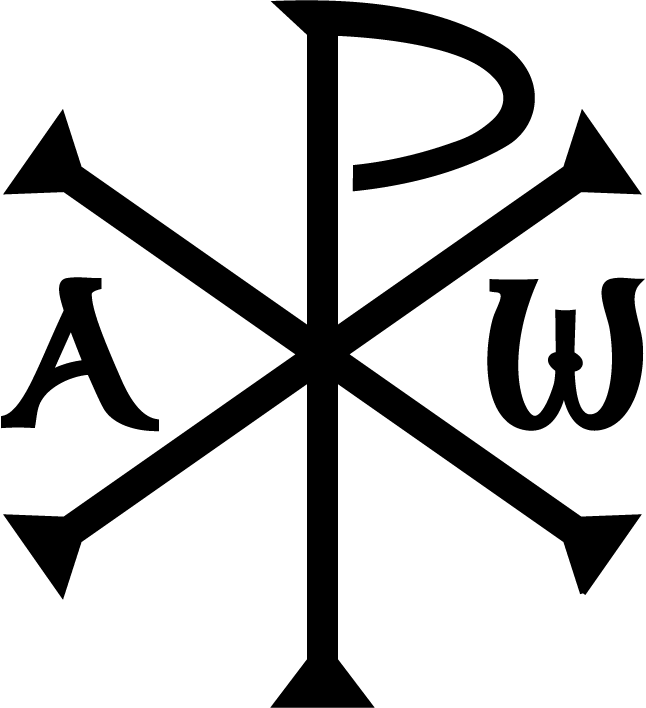
"AΡΧΩ" The Sovereign Christogram (Chi-Rho, Alpha and Omega)
ΑΡΧΩ
In Orthodox iconography, sacred architecture, and liturgical art, the fusion of these elements into the word/monogram ΑΡΧΩ (derived from the Greek root meaning "to rule," "to govern," or "beginning") carries deep dogmatic significance. It intricately combines the Alpha (Α) and Omega (Ω)—signifying that Christ is the eternal Beginning and End of all creation—with the Chi-Rho (ΧΡ), the sacred monogram representing the name of Christos (Jesus Christ).The symbol became famous after Emperor Constantine I saw it in a vision before winning the Battle of Milvian Bridge in 312 AD, leading him to put it on his soldiers' shields. Together (A&Ω+ΧΡ), they proclaim the supreme Orthodox truth that Jesus Christ is the absolute Ruler (Pantokrator) and King of the cosmos, whose divine authority, uncreated light, and eternal kingdom transcend all time and history.
Historic/Scriptural References
- Revelation 1:8 & 22:13: "‘I am the Alpha and the Omega, the Beginning and the End,’ says the Lord..." (The definitive biblical foundation establishing Christ as the eternal Creator and the final consummation of all things).
- Eusebius of Caesarea (Life of Constantine) & Lactantius (De Mortibus Persecutorum): Official early Church historians who record the adoption of the Chi-Rho (the superimposed Greek letters Χ and Ρ) as the divine emblem of Christ, which became the standard of the Byzantine Empire (the Labarum).
- Ancient Christian Epigraphy (4th Century onward): The historical and archaeological record of the early Church (found in catacombs, early basilicas, and Byzantine coins) where the Alpha and Omega were officially placed on either side of the Chi-Rho to defend against Arianism, visually affirming Christ's co-eternity with the Father.